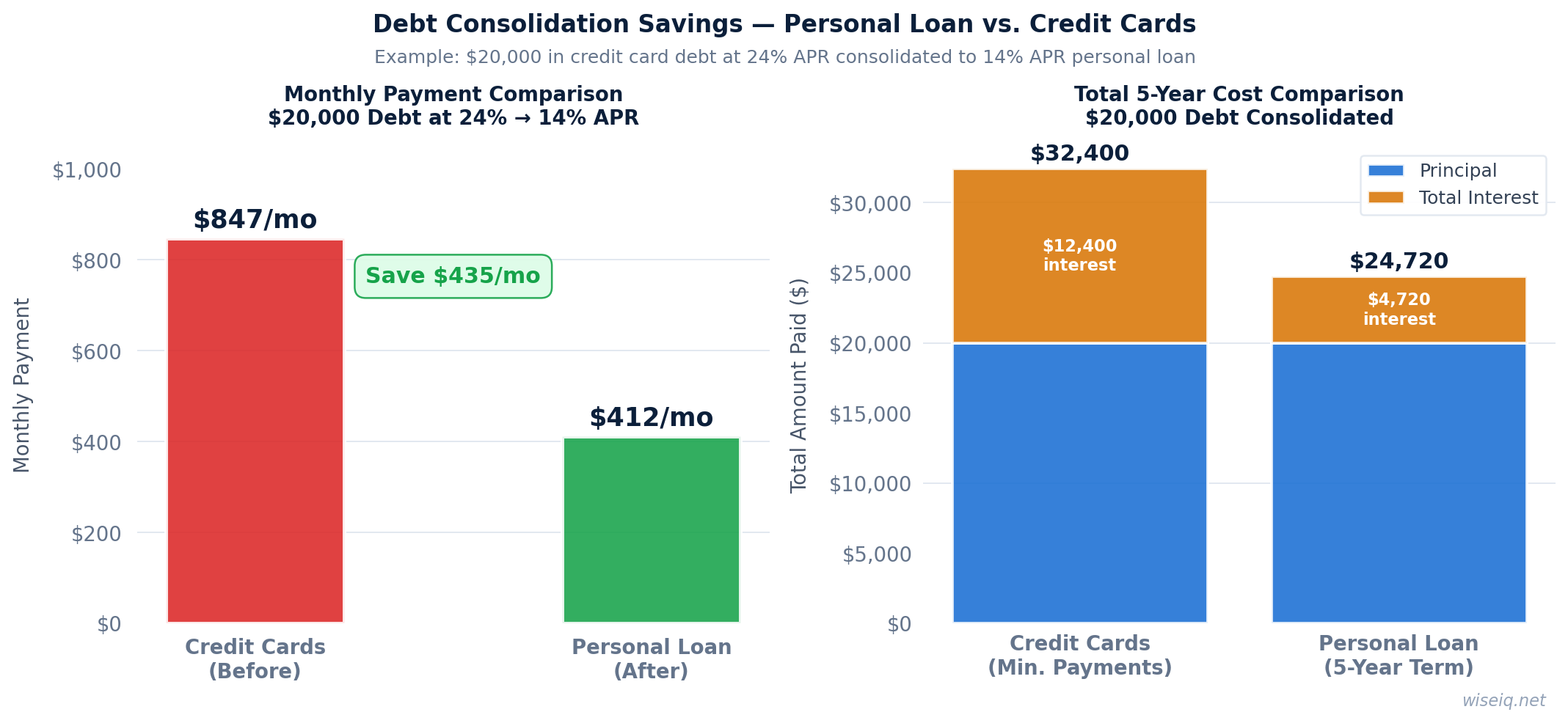
Debt consolidation is one of the most popular uses for Upstart personal loans. By replacing multiple high-interest debts with a single fixed-rate loan, you can simplify your finances and potentially save thousands in interest — especially if you're carrying credit card balances at 20–29% APR.
The avalanche method (paying highest-interest debt first) saves the most money mathematically. The snowball method (smallest balance first) works better for motivation. Choose the one you will actually stick with.
How Upstart Debt Consolidation Works
Getting approved and getting funded are two different steps, and most people who lose the loan lose it in between. Three things that decide it:
- Ask for what your score supports. Under a 660 score, $5,000 to $15,000 gets approved far more often than $25,000 and up. A smaller request usually means a real offer instead of a decline.
- Accept and verify the same day. Offers expire. Have a recent pay stub or bank statement ready to upload, and answer the verification email or call quickly.
- The origination fee comes out of the deposit. It runs 0% to 12%. A $10,000 loan with an 8% fee puts $9,200 in your account, so size the request with the fee in mind.
Is Upstart Good for Debt Consolidation?
Upstart is a strong choice for debt consolidation, particularly for borrowers who don't qualify for the lowest rates at traditional banks. Here's why:
- No minimum credit score: Upstart's AI underwriting considers your education and work history, not just your credit score
- Rates from 6.3% APR: Significantly lower than most credit card APRs (typically 20–29%)
- Loans up to $75,000: Large enough to consolidate substantial debt loads
- Fixed rate and term: Predictable monthly payments make budgeting easier
- Funds in 1 business day: Pay off your cards quickly to stop interest accrual
See who actually approves your score range — and the APR to expect.
Debt Consolidation Example
| Debt | Balance | APR | Monthly Payment |
|---|---|---|---|
| Credit Card 1 | $8,000 | 24.99% | $240 |
| Credit Card 2 | $5,500 | 22.49% | $165 |
| Medical Bill | $3,200 | 18.00% | $96 |
| Total (Current) | $16,700 | ~22% | $501/mo |
| UpstartOur Partner Consolidation Loan | $16,700 | ~14% | ~$388/mo |
Example for illustration only. Your actual rate depends on your credit profile. APR includes origination fee.
Who Upstart Is Best For
⚠️ Not a fit if: you need a secured loan, have a bankruptcy in the last 12 months, or need more than $50,000.
What Happens When You Click — 3 Steps
💡 Expert Tip: Check Your Rate Before You Commit
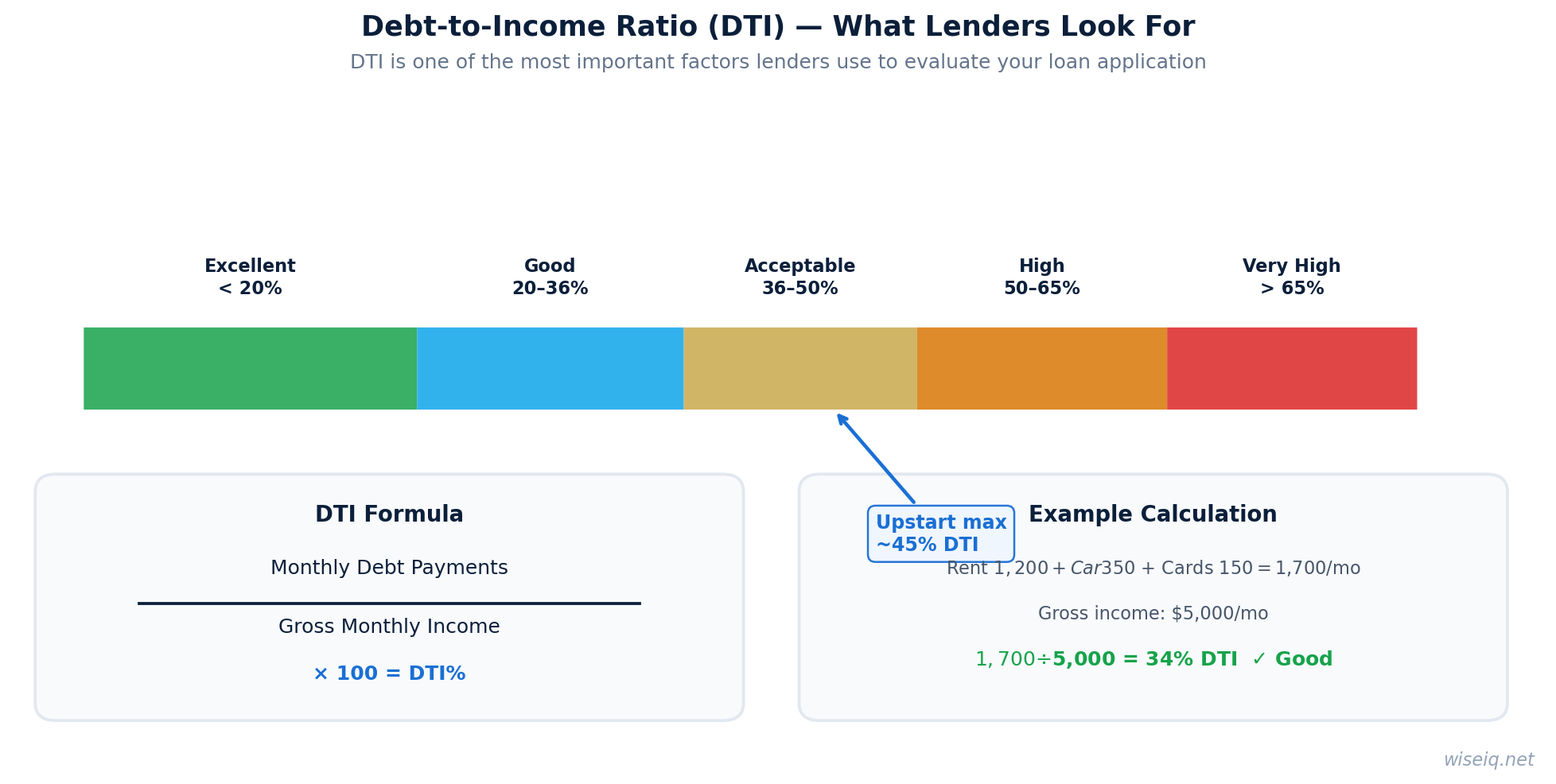
Upstart offers prequalification with a soft credit pull — meaning you can check your rate in minutes without any impact to your credit score. Before applying, review your debt-to-income ratio (DTI): Upstart generally looks for a DTI below 50%. Divide your total monthly debt payments by your gross monthly income to calculate yours. A lower DTI improves your approval odds and typically results in a lower APR.
Consolidation reprices debt — it doesn't remove it
The math of consolidation is genuinely good: swap several 24–29% card balances for one fixed payment at a lower rate and a real end date. The trap door is what happens to the cards afterward. The loan zeroes the balances but leaves the limits — and the spending pattern — fully intact. A meaningful share of consolidators run the cards back up within a couple of years and end up carrying both the loan and new card debt. That outcome is worse than never consolidating.
The fix is behavioral, not financial: keep the cards open (closing them hurts your utilization and history), but remove them from your wallet and every saved-payment field online, put one small recurring bill on each with autopay to keep them active, and treat the consolidation loan's end date as the finish line it's supposed to be.
Frequently Asked Questions
WiseIQ may earn a referral fee from some lenders on this page. This does not influence our editorial ratings or recommendations. Our reviews are independently researched and editorially independent. Updated September 2026.
 Upstart