Table of Contents
A personal loan for home renovation offers a flexible and accessible way to finance your home improvement projects without tapping into your home equity. Whether you're planning a minor upgrade or a major overhaul, these unsecured loans provide a lump sum of cash that can be used for various expenses, from materials and labor to unexpected costs. Unlike home equity lines of credit (HELOCs) or home equity loans, a personal loan doesn't require your home as collateral, reducing your financial risk and simplifying the application process.
This guide will explore the benefits of using a personal loan for home renovation, compare it to other financing options, highlight top lenders like Upstart, and provide insights into average renovation costs and how to maximize your return on investment. We'll also cover qualification requirements and the application process to help you secure the best financing for your dream home.
Upstart: Best for Home Improvement Loans
Upstart stands out as a top lender for home improvement loans, offering a unique AI-powered underwriting process that considers more than just your credit score. This can be particularly beneficial for those with limited credit history or lower scores, making home renovation financing more accessible.
Why use a personal loan for home renovation?
When considering financing options for your home renovation, a personal loan offers several distinct advantages, especially when compared to alternatives like Home Equity Lines of Credit (HELOCs), home equity loans, or credit cards. Understanding these differences can help you make an informed decision that aligns with your financial situation and project goals.
Personal Loan vs. HELOC and Home Equity Loan
The primary distinction lies in collateral. A personal loan for home renovation is typically unsecured, meaning you don't need to use your home as collateral. This significantly reduces your risk, as your home isn't on the line if you face repayment difficulties. In contrast, both HELOCs and home equity loans are secured by your home's equity. While this often translates to lower interest rates, it also means your home could be foreclosed upon if you default on payments.
Another key difference is the interest rate structure. Personal loans usually come with fixed interest rates, providing predictable monthly payments throughout the loan term. HELOCs, on the other hand, often have variable interest rates, which can fluctuate with market conditions, potentially leading to higher payments over time. Home equity loans typically have fixed rates, similar to personal loans, but still require your home as collateral.
Personal Loan vs. Credit Cards
While credit cards can be a convenient option for smaller renovation expenses, they generally come with much higher interest rates than personal loans. Carrying a large balance on a credit card for an extended period can quickly accumulate significant interest charges, making your renovation much more expensive in the long run. Personal loans, with their lower fixed rates and structured repayment plans, are a more cost-effective solution for substantial home improvement projects.
Best lenders for home renovation loans — Upstart #1
Choosing the right lender for your home renovation loan is crucial. While many financial institutions offer personal loans, some stand out for their competitive rates, flexible terms, and borrower-friendly features. Upstart is consistently ranked as a top choice, particularly for its innovative approach to underwriting.
Upstart: Our Top Recommendation
As highlighted earlier, Upstart utilizes an AI-powered lending platform that considers factors beyond traditional credit scores, such as education and employment history. This broadens access to affordable credit for a wider range of borrowers, including those with limited credit files. Their competitive APRs and quick funding times make them an excellent option for urgent home improvement needs. Upstart offers unsecured home improvement loans, making it a great HELOC alternative for many homeowners.
When evaluating other lenders, consider factors such as:
- Interest Rates (APR): Compare the lowest and highest APRs offered.
- Loan Amounts: Ensure the lender offers the amount you need for your project.
- Origination Fees: Some lenders charge a fee to process the loan, which can impact the overall cost.
- Repayment Terms: Look for flexible terms that fit your budget.
- Funding Time: How quickly can you receive the funds?
- Customer Service: Read reviews to gauge borrower satisfaction.
Average home renovation costs: kitchen $25K, bathroom $12K, addition $50K, roof $10K
Understanding the average costs of various home renovation projects can help you budget effectively and determine the appropriate loan amount. These figures can vary significantly based on location, materials, and the scope of work, but they provide a good starting point for planning your project.
| Project | Average Cost | Potential ROI |
|---|---|---|
| Kitchen Remodel (Minor) | $25,000 | 70-80% |
| Bathroom Renovation | $12,000 | 60-70% |
| Room Addition | $50,000+ | 50-60% |
| Roof Replacement | $10,000 | 60-70% |
| Deck Addition | $15,000 | 60-70% |
These are just averages, and your actual costs may differ. It's always recommended to get multiple quotes from contractors to ensure accurate budgeting for your renovation loan.
How to qualify for a personal loan for home renovation
Qualifying for a personal loan for home renovation involves meeting certain criteria set by lenders. While requirements vary, common factors include your credit score, income, and debt-to-income ratio. Lenders assess these to determine your ability to repay the loan.
- Credit Score: A good credit score (typically 670+) will give you access to better rates. However, some lenders like Upstart consider scores as low as 580, using alternative data to assess creditworthiness.
- Income: Lenders want to see a stable income that demonstrates your ability to make monthly payments.
- Debt-to-Income (DTI) Ratio: Your DTI ratio compares your monthly debt payments to your gross monthly income. A lower DTI indicates you have more disposable income to cover new loan payments.
- Employment History: A consistent employment history signals financial stability.
Even if you have a less-than-perfect credit score, exploring options with lenders that use alternative underwriting models, such as Upstart, can increase your chances of approval for a renovation loan.
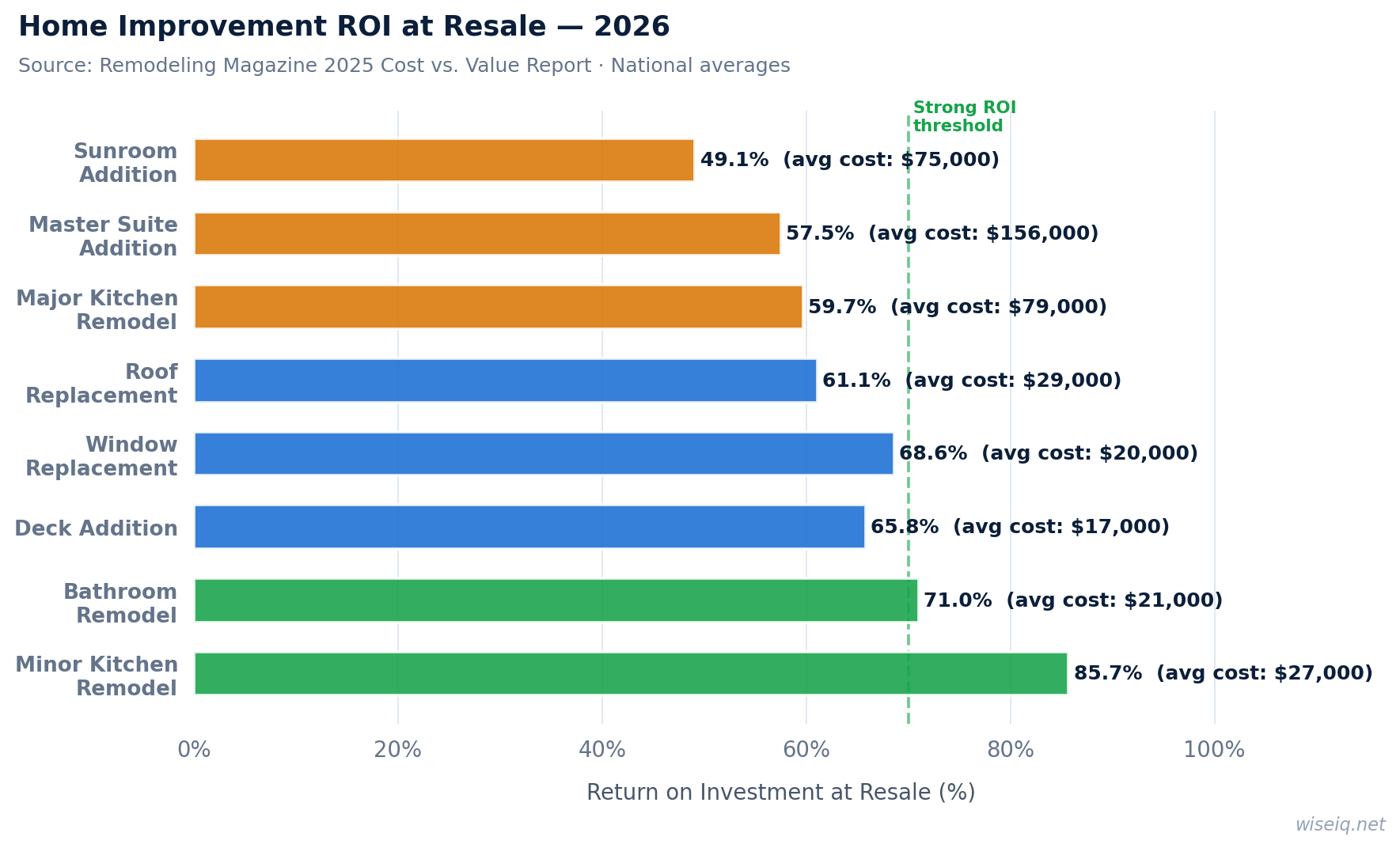
Home renovation ROI — which projects add the most value
Investing in home renovations can significantly increase your property's value, but not all projects offer the same return on investment (ROI). Understanding which renovations yield the highest ROI can help you prioritize your projects and make smart financial decisions, especially when using a personal loan for home improvement.
Projects that consistently show strong ROI include:
- Minor Kitchen Remodel: Updating cabinets, countertops, and appliances can offer a significant return.
- Bathroom Remodel: Modernizing a bathroom is a popular choice for buyers.
- Adding a Deck or Patio: Enhancing outdoor living spaces is often appealing.
- Replacing a Garage Door: This relatively inexpensive upgrade can dramatically improve curb appeal.
- New Siding or Manufactured Stone Veneer: Boosts exterior aesthetics and durability.
Conversely, highly personalized or overly luxurious renovations may not always recoup their costs upon resale. Focus on improvements that appeal to a broad range of potential buyers and enhance functionality and curb appeal to maximize your home value increase.
How to apply for a personal loan for home renovation
Applying for a personal loan for home renovation is a straightforward process that typically involves a few key steps. Being prepared with the necessary documentation can expedite the application and funding process for your unsecured home improvement loan.
- Check Your Credit: Review your credit report for any errors and understand your credit score. This will give you an idea of what rates you might qualify for.
- Compare Lenders: Research different lenders and compare their APRs, loan amounts, fees, and terms. Consider lenders like Upstart that offer competitive options for renovation loans.
- Gather Documents: You'll typically need proof of identity (driver's license, passport), proof of income (pay stubs, tax returns), and bank statements.
- Submit Application: Complete the online application form, providing accurate financial and personal information.
- Review Offer and Accept: If approved, review the loan offer carefully, paying attention to the APR, monthly payment, and any fees. Once satisfied, accept the offer.
- Receive Funds: Funds are often disbursed directly to your bank account, sometimes as fast as one business day, allowing you to start your contractor financing or DIY projects promptly.
Remember to only borrow what you need and ensure the monthly payments fit comfortably within your budget.
Comparison Table: Best Personal Loans for Home Renovation
| Lender | APR Range | Max Amount | Origination Fee | Funding Time |
|---|---|---|---|---|
| UpstartOur Partner | 6.3%–35.99% | $50,000 | 0%–12% | 1 business day |
| LightStream | 6.99%–23.99% | $100,000 | 0% | 1 business day |
| SoFi | 8.99%–29.99% | $100,000 | 0% | 1-3 business days |
| Marcus by Goldman Sachs | 6.99%–24.99% | $40,000 | 0% | 1-4 business days |
Pros of Upstart
- Considers more than just credit score (education, employment)
- Good for those with limited credit history
- Fast funding (as soon as 1 business day)
- No prepayment penalties
- Unsecured loan, no home equity required
Cons of Upstart
- Higher maximum APR compared to some competitors
- Origination fees can be up to 12%
- Lower maximum loan amount ($50,000) compared to some lenders